
Music and Therapy

The Power of Music Therapy
Imagine sitting outside on a hot summer day enjoying an ice cream cone when you hear the Beach Boys song “Surfin’ USA” or Taylor Swift’s “Shake it Off.” Fast forward to a rainy, cold day, and you hear one of these songs. Can you imagine that summer day when you listened to the song? How do you feel? Do you feel relaxed or happy as your mind drifts back to that summer day enjoying your ice cream? This is the power of music and its ability to transport you to a place of comfort and joy.
The journey through pediatric cancer is filled with daily stressors for the entire family, particularly for your cancer warrior. Your child will experience varying levels of stress, anxiety, and pain throughout their cancer testing and treatments. For some children, these times can occur in unfamiliar surroundings, disrupt their daily routines, and separate them from family and friends. Music therapy, a non-invasive and effective approach, can help decrease your child’s stress without medication and is recognized as a successful therapy in helping children cope with the stressors of cancer. This can provide comfort and joy during this challenging time. Here, we will describe in more detail, review the benefits of music therapy, identify who delivers this therapy, and discuss how you can help your child benefit from music therapy at home.
What is music therapy?
Music is a universal language and is part of every culture. Children of all ages love music. Music therapy is a fun, non-traditional therapy, without the use of medication, using music to help reduce the stress, anxiety, and pain often experienced during pediatric cancer. All parts of your child’s brain are involved when your child creates music. It produces chemical changes in the brain that positively affect feelings, memory, and physical movement.
It’s important to note that this style of therapy is not just a feel-good activity but a scientifically supported practice. These therapy interventions are research-based, providing a solid foundation for their effectiveness. It can be performed one-on-one or in a group. Children of all ages can benefit from participating in music therapy. Infants receive music therapy while being held, with recorded or sung music. Children from toddlers to teens can participate in making the music or simply listening to music.
A certified music therapist is often a part of your child’s multidisciplinary team in the hospital. These professionals can also be found in schools, rehabilitation centers, and other caregiving agencies in the community. Music therapy interventions are tailored to your child’s age and abilities. A board-certified music therapist, or MT-BC, undergoes re-certification every five years. This ensures a music therapist is current with new practices in their field. The two most common types of music therapy are:
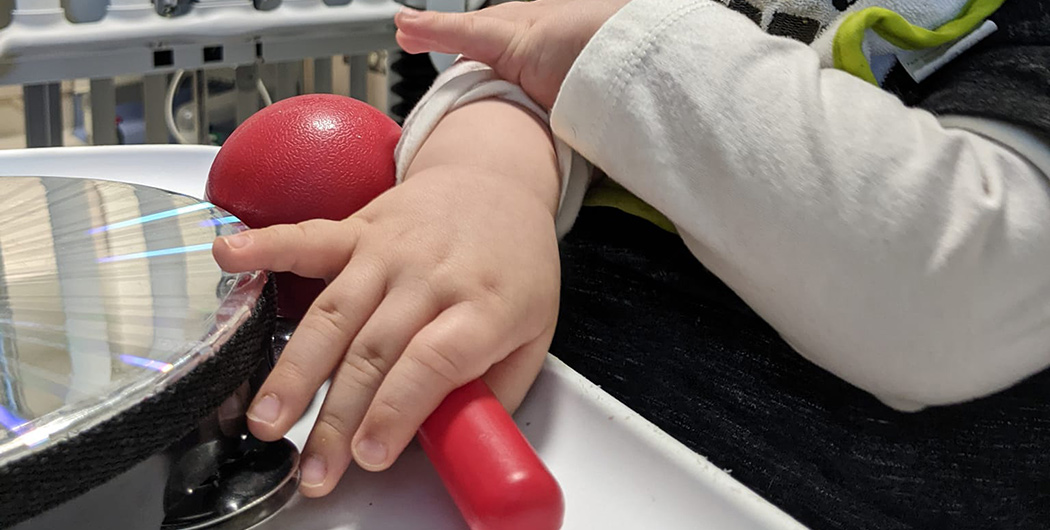
- Active —Your child creates music using an instrument such as a rattle, tambourine, drum, or keyboard. Singing and dancing are also active forms of therapy.
- Receptive – Your child listens to recorded or live music.
What are the benefits?
There are numerous benefits for your child, which include:
- Pain management:
- Coping/self-expression:
- Social interaction
- Motor development
A common measurable sign of stress in humans is an increased heart rate or breathing rate. A study consisted of a child and their parent completing a quality-of-life survey asking questions related to physical, emotional, and social functioning and recording the child’s heart and breathing rates before four weekly music therapy sessions. The results showed reduced pain, nausea, and anxiety in the children related to medical procedures based on their responses to the quality-of-life questionnaire and their heart and breathing rates.1
A review of the literature shows that children who listen to music before surgery show a reduction in anxiety in both the children and their parents. Reducing anxiety/fear levels can help your child interact easier with others and support your child’s willingness to comply with treatments. Another study conducted with children undergoing bone marrow biopsy and lumbar puncture showed a decrease in the children’s perception of anxiety and pain accompanied by a significant decrease in the children’s heart rate and breathing rate when receiving music therapy.2
The best part…
When your child engages in music therapy, they have a chance to escape into the world of music for a while. Many aspects of your child’s cancer journey are beyond their control, but in music therapy, they take charge. Your child expresses themselves by choosing how to interact with the music. They decide the tone and volume for singing, how they engage with instruments, and what movements to use while dancing.
Music encourages your child to interact with the music therapist and other children in the group. This social interaction in a non-medical environment will assist your child in developing essential life skills, such as communication, cooperation, and building relationships. It will also help build their self-esteem.
Music promotes physical function by engaging a child’s body. When your child presses keys or plucks strings on an instrument, they use fine motor skills that involve small muscle groups. Meanwhile, they engage gross motor skills—using large muscle groups—when they dance, clap, stomp, or play a larger instrument. Maintaining or improving motor skills is essential during childhood, as it supports both physical and behavioral development.
How you can help your child
Music therapy relies on the interaction between your child and the music to help decrease stress, anxiety, and pain. Your involvement in this fun time with your child is beneficial. A certified music therapist is essential to your child’s care team. If your child is not yet involved in a music therapy program, particularly during hospital encounters, feel free to ask a nurse or social worker how you can help your child be involved in music therapy. In the home setting, you can support your child’s experience with music therapy by engaging your child in activities such as listening to music, dancing, drumming on a box or a pot, or singing to your child before bed. Music is powerful and can bring comfort and joy during a stressful time for you and your child.
References
- Fedhila F, Hannachi MW, Jbebli E, Selmi I, Rhayem S, Magouri I, Bellali H, Khemiri M. Impact of Music Therapy on Quality of Life in Children with Cancer. Children. 2023; 10(9):1486. DOI: 10.3390/children10091486
- Nguyen TN, Nilsson S, Hellström AL, et al. Music therapy to reduce pain and anxiety in children with cancer undergoing lumbar puncture: a randomized clinical trial. J Pediatr Oncol Nurs. 2010;27:146–155. [PubMed]
- The relevance of music therapy in pediatric and adolescent cancer patients: a scoping review. National Center for Biotechnology Information.
- MT for children with oncology/hematological conditions and their families; advancing the standard of psychosocial care. 2022 Journal of Pediatric Hematology/Oncology Nursing.
- American Music Therapy Association Inc. Fact Sheet: Music Therapy in Pediatric Medical Care, 2021.
- St. Jude Children’s Research Hospital. Integrative Medicine: Music Therapy.
- Certification Board for Music Therapists.