
Breathing Emergencies Childhood Cancer

Treatment For Breathing Emergencies
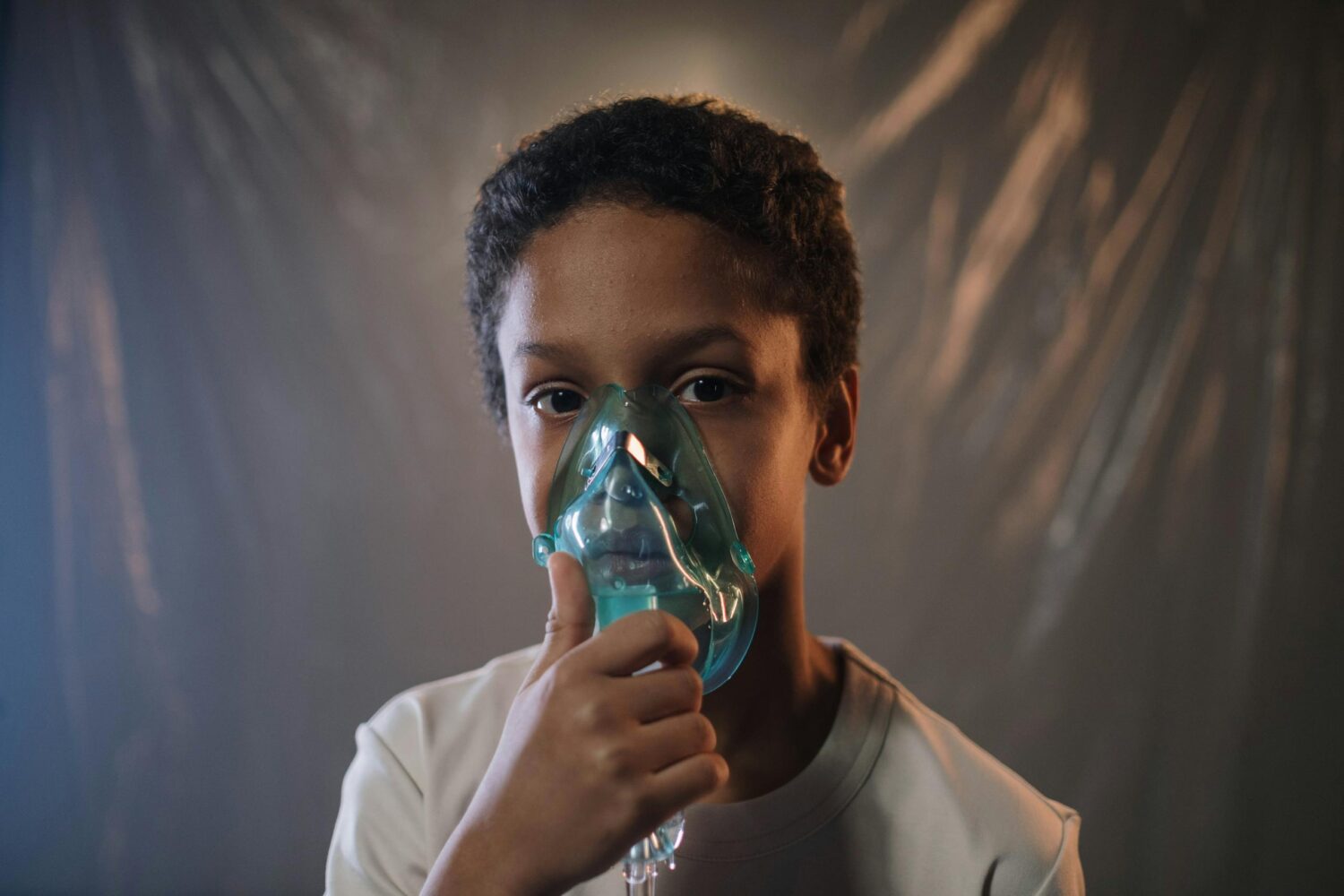
Breathing emergencies can be scary. Shortness of breath feels like you have just run around the block and are gasping for breath, even when you are not active. It makes your breathing faster and deeper, and your chest can feel tight, as if you cannot expand your lungs. Sometimes you can hear a whistling sound. It can start suddenly and get bad enough that you cannot say a full sentence without stopping for a breath between words.
Difficulty breathing (dyspnea) is a common complication of childhood cancer and cancer treatments. Dyspnea may be the initial reason for seeking medical care. When a tumor grows anywhere in the chest and puts pressure on the airway or lung, it will make it hard to take in a deep breath. If your child has cancer, it is likely that they will have dyspnea at some point.
Following these steps may provide some relief during breathing emergencies.
- Sit them up in a forward-leaning position.
- Make sure their clothes are not too tight, and if they are, loosen them.
- Give them their inhaler if they have one.
- Encourage them to focus on breathing in through the nose and out through the mouth.
- When breathing out, instruct them to pucker their lips like they are whistling and exhale through the small hole.
- Try to distract them with something they enjoy, like reading to them or putting on their favorite show or music.
- Make sure they are in a well-ventilated room with no cigarette smoke, dust, or animals they may be allergic to.
If their shortness of breath does not get better quickly with these steps, or if you hear a whistle from their neck or chest when they breathe, they may be having a medical emergency. Call 911 immediately. Do not take them to the doctor or hospital yourself. Children can go from fine to bad, to worse, to critical quickly.
Different cancers can cause breathing problems in different ways. One of the services that the Sassy Carmen Foundation provides is to educate parents about their child’s cancer through articles and blogs, like the one you are reading now. Let’s look at some different types of cancer to see how they can disrupt normal breathing and what doctors can do to relieve this symptom.
Lymphoma
If a tumor blocks lymphatic circulation, it can cause lymph fluid to build up between the lung and the rib cage, pressing on the lung and preventing deep breaths. The buildup of lymph fluid is a pleural effusion. If the fluid contains cancer cells, it is a malignant pleural effusion (MPE). Since you cannot take a deep breath in, you have to breathe faster by taking more frequent, smaller breaths instead. When the work of breathing gets harder and a child has to focus all their attention on it, they can get scared and tired. They cannot maintain this pace for long before they wear down and stop breathing altogether. To get the fluid out, doctors can put a tube into the chest so it can drain. Unfortunately, if it happens once, it will most likely happen again. While lymphoma, especially non-Hodgkin’s lymphoma, is the most common cancer that can produce MPEs, it is also common with leukemias.
Leukemia
Leukemia patients can become anemic from a loss of red blood cells (RBCs). The red blood cells are like little boxes in the blood that deliver oxygen to the organs. When the RBC supply is low, the body doesn’t get enough oxygen. This happens when the cancer gets inside the bone marrow, where the body makes new blood cells. The cancer cells take up a lot of the space inside the marrow, so there is less space to make new blood cells. RBCs only live about 90 days. When the marrow cannot make enough new RBCs to replace the old ones, then the organs become hypoxic (lacking oxygen). When organs get hypoxic, breathing gets faster and deeper as your brain tries to increase oxygen; however, this does not help because, even though more oxygen is coming into the lungs, there are not enough blood vessels to carry it through the body. If RBC levels are too low, the doctor will consider giving blood to increase the supply.
Mediastinal Mass
Tumors in the middle of your chest near your heart can grow close to your trachea (windpipe) or the airways leading to your lungs. Doctors can sometimes initially mistake the coughing and wheezing caused by these tumors for a cold or asthma. While these tumors are usually not cancerous, they can still be dangerous when they press against your airway. When air passes through a narrowed airway, it can cause wheezing, which is a whistling sound as air passes through a small opening. A child’s airway is soft and flexible and can collapse because of the pressure from large tumors. Children with leukemia are prone to develop mediastinal masses that can restrict the trachea or the superior vena cava (SVC), depending on the location. The SVC is the largest vein in the body. It brings blood back to the heart. An occlusion here can decrease blood supply to the heart. Radiation treatments may be able to shrink these tumors to relieve some of the pressure.
Complete airway collapse is a critical medical emergency. If doctors have diagnosed your child with a mediastinal mass and you are hearing wheezing when they breathe, especially if it gets worse when they lie down, it could be a life-threatening airway restriction developing that needs immediate intervention.
Breathing Emergencies – Cancer Treatments
Along with cancer cells, chemotherapy also kills healthy cells. White blood cells (WBCs) fight off infections. When chemotherapy kills too many WBCs, infections like pneumonia can develop. Pneumonia fills the lung tissue with fluid and makes it hard to breathe. Chemotherapy and radiation can scar lung tissue, making it stiff and hard to expand when breathing. Inflammation from stem cell transplants (pneumonitis) makes breathing difficult. Left untreated, pneumonitis can permanently scar the lungs, causing pulmonary fibrosis.
Breathing is something we all do every day automatically. We don’t have to think about it, it just happens…until something goes wrong. We all know that cancer is serious, but we don’t usually think about how it can make it hard to breathe. If cancer is a reality for your family, keep following Sassy Carmen for more articles like this one to help prepare you so that nothing catches you off guard. It is important to know what to look for so that what might seem like a minor inconvenience symptom doesn’t turn out to be something serious.
Resources Breathing Emergencies:
https://www.cancer.org/cancer/managing-cancer/side-effects/shortness-of-breath.html
https://pemcincinnati.com/blog/wp-content/uploads/2015/09/Ped-Onc-Emergenices.pdf
https://www.myleukemiateam.com/resources/is-shortness-of-breath-normal-with-leukemia
https://www.ncbi.nlm.nih.gov/books/NBK507720