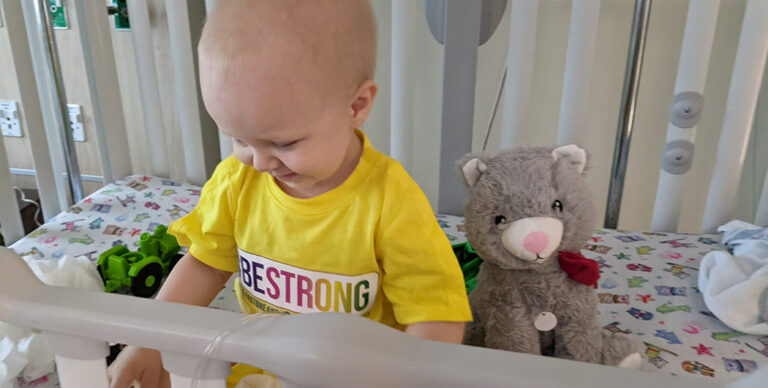


Speak Up!

Tips to Help Prevent Errors in Your Child’s Care During Hospitalization
When your child is admitted to the hospital, you may feel frightened, concerned, and helpless. You may wonder if there is anything you can do to keep your child safe from healthcare errors and ensure they receive the best possible treatment. The answer is yes—your involvement in their care can help prevent mistakes and ensure your child receives the best care available. The Joint Commission, the largest healthcare accrediting body in the United States, created the Speak Up™ campaign to help patients and their caregivers become active in their care. In this article, we will examine ways you can help make your child’s hospitalization a safe and positive experience, drawing inspiration from The Joint Commission’s Speak Up™ program.
Speak Up Regarding Identification
Mistaken identity can lead to serious errors. When your child is admitted, they will be given an identification band. Be sure to check your child’s identification band and make sure the information is correct. Staff members who enter your child’s room to give medications or perform a procedure should check the identification band. If a staff member does not check the ID band, ask them to do so. You can speak up and say, “Before we start, will you please check my child’s ID bracelet to make sure you have the right patient?” You should also expect healthcare workers to identify themselves. Look for their ID badges. If you are unsure who they are, ask for identification.
Speak Up to Prevent Infection
Children with cancer often have weakened immune systems. This makes infections easy to catch and very dangerous. Notice whether healthcare workers who are coming in contact with your child have washed their hands or used hand sanitizer. Handwashing is the most important way to prevent infections. Don’t be afraid to ask your doctor or nurse to do this. It’s okay to speak up and say, “I noticed you didn’t wash your hands. Would you mind doing that before examining my child?”
Speak Up Regarding Medications
Medication errors are among the most common errors in hospitals. You can help prevent these errors by keeping a list of your child’s medications, including doses and schedules. When a new medication is introduced in the hospital, ask for the name and purpose of the medication. If you feel an incorrect medication or dose is being given, speak up and say, “Can we double-check and make sure this is the right medication?”
Speak Up Regarding Tests and Procedures
Errors can easily occur during tests and procedures. As a parent or caregiver, make sure you understand the purpose of each test or procedure. Ask about possible side effects of treatments and signs you should watch for. Ask when you can expect to receive results and follow up if you don’t hear back when expected. Don’t hesitate to say, “We haven’t heard about the test results. Can you please check on that?” When you receive results, if you don’t understand or something isn’t clear, speak up and say, “Can you explain this in simpler terms?”
Speak Up When Your Child is Being Discharged Home
Errors often occur when a patient is transferred from the hospital to home. You can help ensure a smooth transition for your child by getting a clear explanation of what will be needed to care for your child at home. Be sure to get written instructions for all new medications. Make sure you understand when your child will need to follow up with their primary care physician or other specialist. Review your child’s discharge instructions and make sure you have a clear understanding of them. Don’t hesitate to ask questions about your child’s discharge instructions. You might say, “Before we leave, will you please go over the home care instructions one more time to make sure I understand everything?”
Speak Up When Things Don’t Seem Right—Trust Your Instincts
You know your child better than anyone else. When something doesn’t seem right, speak up immediately. Describe what you’re seeing or feeling, and don’t be afraid to go up the chain of command if necessary. In a hospital, this would include speaking with a nurse, and if you don’t feel you are being heard, ask for the Charge Nurse, then the Unit Manager, Director of Nursing, etc. You can say, “I know my child and something seems off. Can you please talk with me about this?”
Overcoming Your Fear of Speaking Up
Sometimes, parents hesitate to speak up because they don’t want to appear rude or demanding. Some parents feel intimidated by medical professionals and worry that speaking up may negatively affect their child’s care. It is important to realize that good healthcare providers value your input. They know parents can help prevent errors by being involved in their child’s care. Just be honest and open and say, “I’m concerned about…” or “I know you’re busy, but can we please talk about…” It’s also important to teach your child to speak up as they get older and become more involved in their own care. Teach them to describe how they’re feeling and ask questions about their treatment.
Remember, as a parent of a child with cancer, you play a vital role in ensuring their safety and well-being during hospitalizations. By asking questions and speaking up you become an important part of your child’s healthcare team. You are being an advocate for your little fighter! Don’t be afraid to use your voice to ensure the highest quality care is being given to your child.
By embracing the principles of the Speak Up™ program and applying them to specific situations you may encounter, you are helping to create a safer environment. Speaking up is not just a right—it’s a responsibility that can make a significant difference in your child’s care and recovery.
References:
The Joint Commission (2024). Speak Up Campaigns. Retrieved from https://www.jointcommission.org/resources/for-consumers/speak-up-campaigns/#sort=%40z95xz95xcontentdate%20descending